



Rosh Hashanah, commonly known as the “Jewish New Year,” is one of the most important and greatly anticipated holidays of the year. (See Lev. 23:23–25.)
The season of Rosh Hashanah is colored by personal renewal. It is a great time to say goodbye to the old, and welcome in the new.
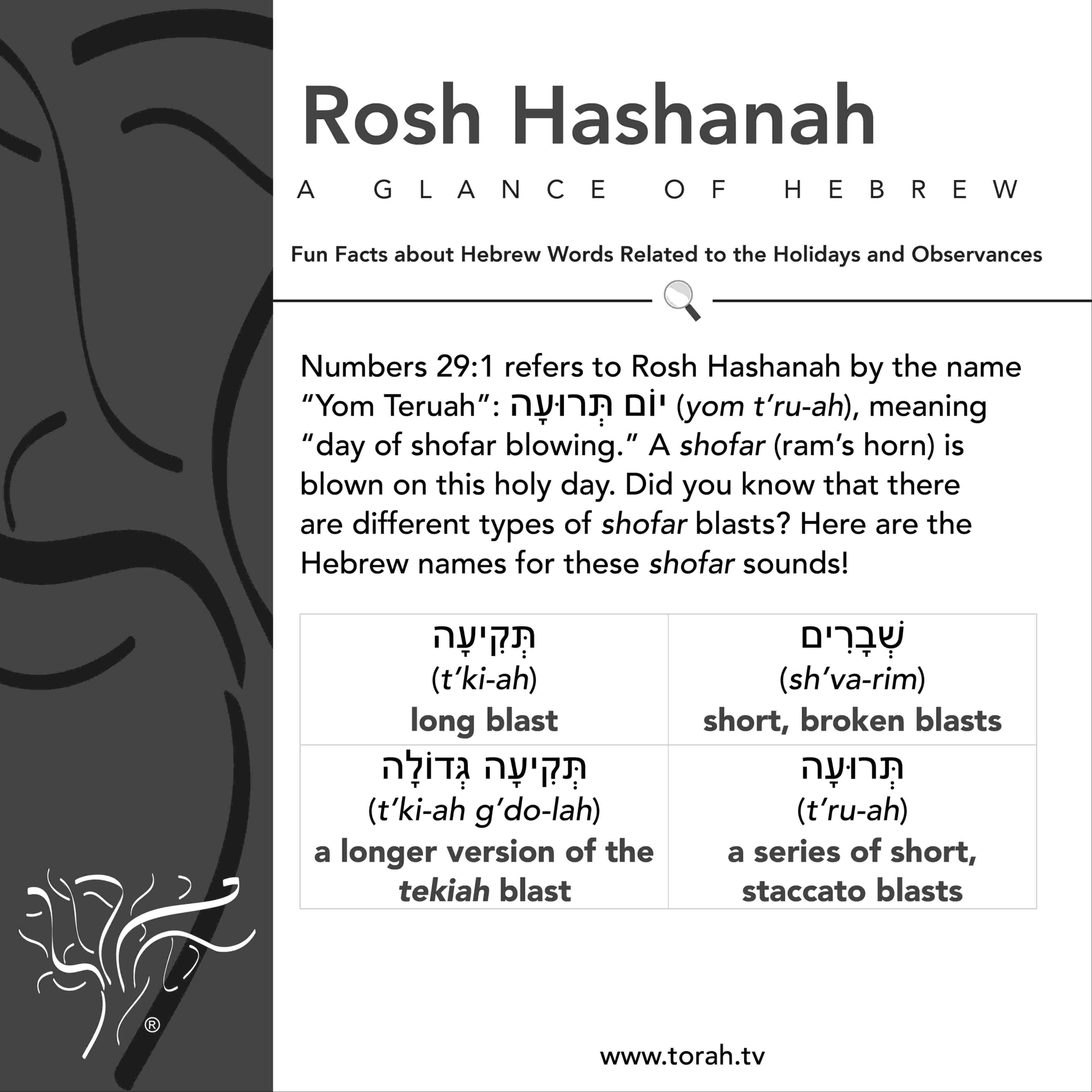
Rosh Hashanah is known by several names, one of which is Yom Teruah (“the Day of Shofar Blowing”). It is also called Yom Hazikaron (“the Day of Remembrance”) and Yom Hadin (“the Day of Judgment”), as it is the day when the Almighty determines our future for the year to come.
This time period is when God presides over His Heavenly Courtroom. The opening of the trial commences on Rosh Hashanah and extends until Yom Kippur.

This High Holy Day is commemorated by several observances, including:
- The blowing of the shofar (ram’s horn)
- The custom of tashlich—going to a body of water and symbolically casting away
mistakes and shortcomings from the previous year - Eating round challah loaves dotted with raisins, dipped in honey to symbolize a sweet New Year (challah is a braided loaf of bread, traditionally baked to honor Shabbat)
- Dipping apples in honey

Rosh Hashanah not only begins a new year, but has also been thought of as God’s coronation ceremony in which we crown God as King. The round challah which is prepared and eaten on this holiday is symbolic of both the year’s cyclical nature, as well as the crown with which we desire to crown God as King of the world.

Rosh Hashanah is a two-day observance which begins the evening of September 11, 2026, and lasts until the evening of September 13, 2026 (Tishrei 1 and 2 on the Hebrew calendar).

24. …In the seventh month, in the first day of the month, shall be a solemn rest unto you, a memorial proclaimed with the blast of horns, a holy convocation.

Traditional greetings for this holiday are: Shanah Tovah U’metukah (“Have a happy and sweet New Year”), Shanah Tovah (“Happy New Year”), and Chag Same’ach (Happy Holiday)!

Be sure to check your STBM emails for news and updates about local Rosh Hashanah events. Not getting STBM emails? Sign up for FREE today by CLICKING HERE.
Pronunciation Guide for Transliterated Hebrew Words
| a | [a] as in arm |
| ai | [ai] as in Thailand |
| e | [e] as in red |
| ei | [ei] as in eight |
| i | [i] as in ski |
| o | [o] as in score |
| oi | [oi] as in oil |
| u | [u] as in rule |
| ui | [ui] as in gluing |
| ch/kh | [ch] as in the Scottish loch |
| g | [g] as in good (not as in giant) |
| tz | [ts] as in hats |
| ‘ | short “eh” or “uh” sound |
The Hebrew Scriptures in this text have been derived from the Westminster Leningrad Codex (WLC), and the English translation is based off of the JPS 1917 Tanakh.
Simchat Torah Beit Midrash®
