


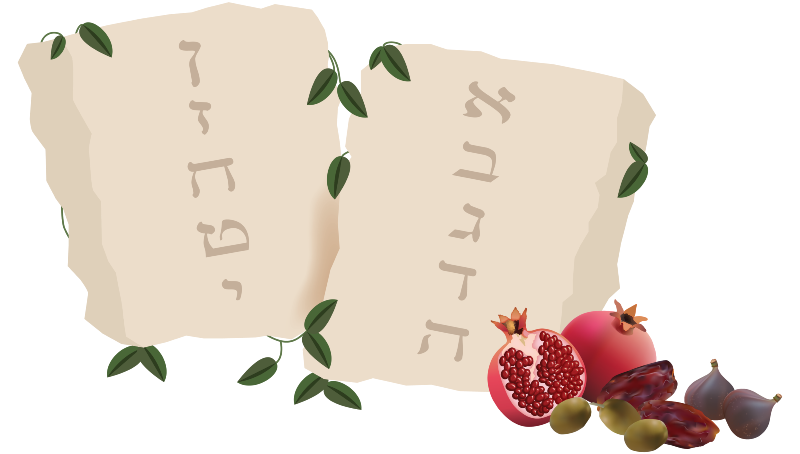
Shavuot, one of the Three Pilgrimage Festivals, is an important holiday which commemorates the Giving of the Torah at Mount Sinai.

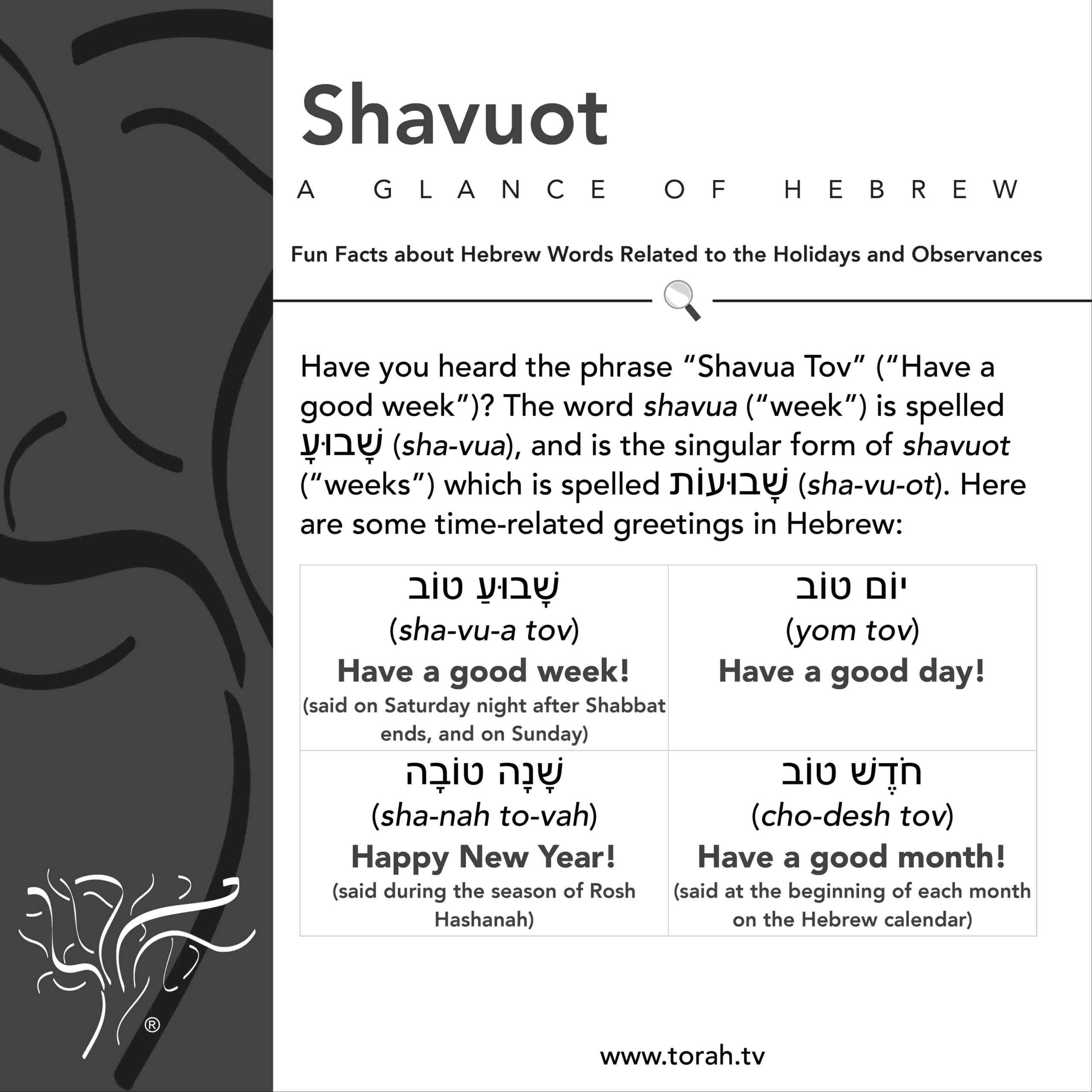
In Hebrew, “shavuot” means “weeks.” It marks the end of the seven-week counting period between Passover and Shavuot. This counting period is known as the Counting of the Omer, which is a 49-day period of spiritual refinement which prepared the Jewish people to receive the Torah.
The Giving of the Torah at Mount Sinai was a momentous event for the Jewish people. Over 3,000 years ago, the Children of Israel left Egypt on Passover. Fifty days after the Exodus, they all stood together at the foot of Mount Sinai where God gave them the Torah. This historic day was Shavuot.
The Sages have compared Shavuot to a wedding between God and the Jewish people. The Torah was His precious wedding gift to them. Every year, Shavuot is a time to renew the acceptance of that gift, the Torah; it is a time to renew the vows taken at Mount Sinai. And every year, the Counting of the Omer, which leads to Shavuot, is a time of spiritual refinement and personal growth in preparation for the renewal of those vows.
In ancient times, two loaves of wheat bread would be brought and offered in the Temple on Shavuot. This is also the time when the Children of Israel would begin to bring their choicest first fruits, called Bikkurim. Through the Bikkurim offering, the people expressed thanks to God for the bounty of the Land. This offering would be brought to the Temple up until Chanukah.

Customs and traditions for this special holiday include:
- Staying up all night studying the Torah
- Eating a dairy meal, followed by a meat meal
- Reading the Book of Ruth

Outside of Israel, Shavuot is a two-day holiday that begins on the evening of May 21, 2026, and ends the evening of May 23, 2026 (Sivan 6–7 on the Hebrew calendar). In Israel, Shavuot is a one-day holiday that begins on the evening of May 21, 2026, and ends the evening of May 22, 2026 (Sivan 6 on the Hebrew calendar).

Traditional greetings for this holiday are: Chag Shavuot Same’ach (Happy Shavuot) and Chag Same’ach (Happy Holiday)!
Pronunciation Guide for Transliterated Hebrew Words
| a | [a] as in arm |
| ai | [ai] as in Thailand |
| e | [e] as in red |
| ei | [ei] as in eight |
| i | [i] as in ski |
| o | [o] as in score |
| oi | [oi] as in oil |
| u | [u] as in rule |
| ui | [ui] as in gluing |
| ch/kh | [ch] as in the Scottish loch |
| g | [g] as in good (not as in giant) |
| tz | [ts] as in hats |
| ‘ | short “eh” or “uh” sound |
The Hebrew Scriptures in this text have been derived from the Westminster Leningrad Codex (WLC), and the English translation is based off of the JPS 1917 Tanakh.
Simchat Torah Beit Midrash®
