Join us every Saturday, Monday, and Thursday for study sessions!

Head to our Locations page to find an STBM Center near you.

Interested in learning more?

Keep that study alive by checking out our ICTS™ registration page!

Want more of…this?

Watch Ralph Messer anywhere and anytime with our RRM™ Subscription!

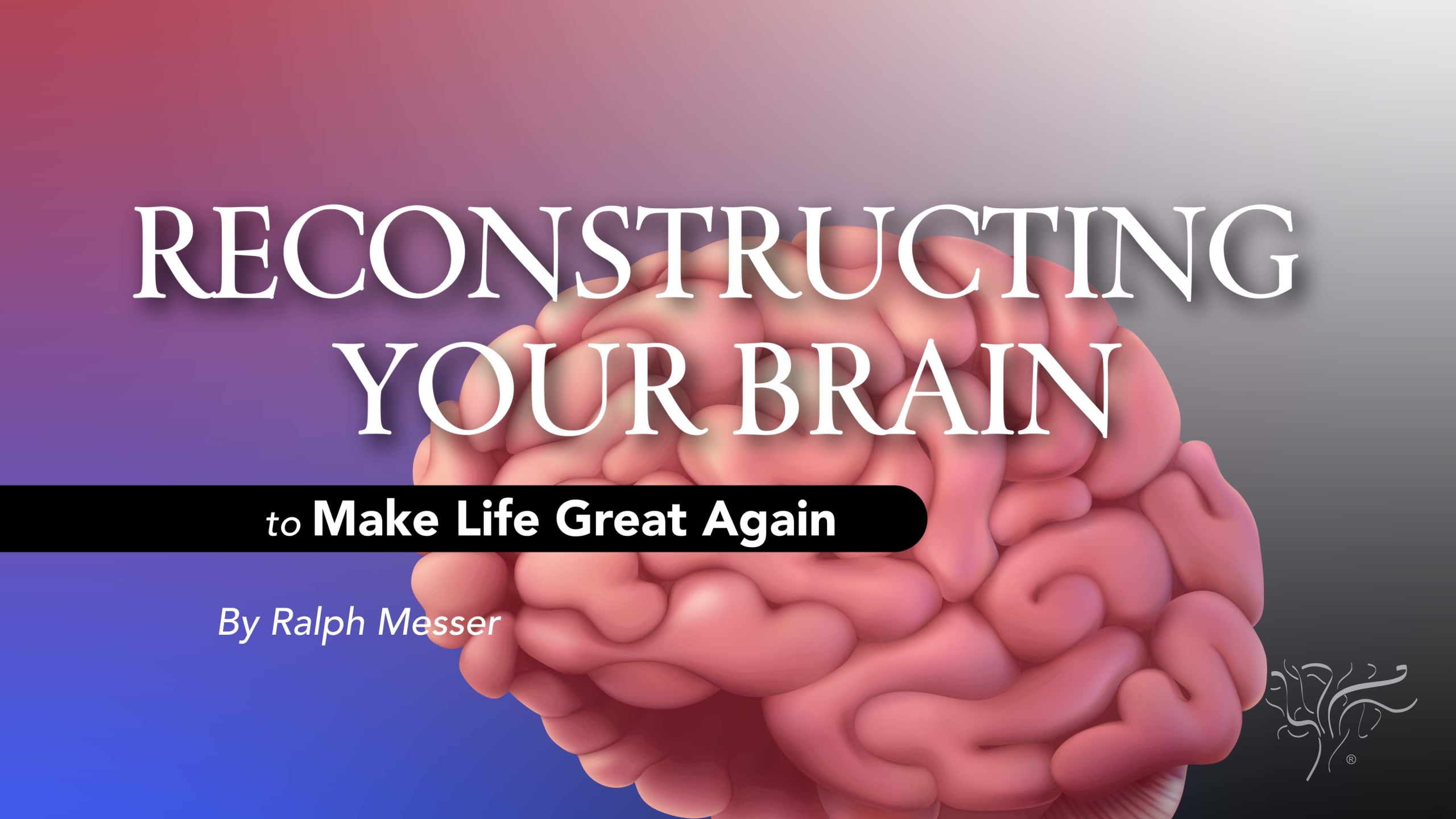
Reconstructing Your Brain to Make Life Great Again

The relationship between the mind and the brain is one of the most fascinating and misunderstood aspects of human existence. Does the brain control the mind, or is it the other way around? To truly make life great again, understanding this distinction is crucial.

Mind vs. Brain: What’s the Difference?

For decades, many people have used the terms “mind” and “brain” interchangeably. Popular literature often describes the brain as the source of thoughts, emotions, and behaviors. But here’s the truth: Your brain can’t do anything on its own.

Imagine looking at a brain outside of a body. It’s silent, immobile, and incapable of producing a single thought. The difference between a lifeless brain and your vibrant one is the mind. The mind is alive, dynamic, and uniquely human. It’s the part of you that processes thoughts, experiences emotions, and makes decisions. It’s not a physical entity but a gravitational field that interacts with the brain and body, shaping how you perceive and respond to the world around you.

The Science of Mind as a Field

Think of the mind as a powerful, energetic field surrounding and penetrating your entire body. Nobel Prize-winning science supports this concept of a gravitational or electromagnetic field. When you’re alive, this field is active, helping you process auditory and visual signals, interpret them, and create meaning.

At a mind-blowing speed of 400 billion actions per second, your mind translates these signals into physical structures in your brain, forming protein-based “trees.” The roots of these trees represent the raw information you receive, while the branches symbolize your interpretations and memories.

This process explains why interactions can feel so impactful. Ever walked into a room with someone in a great mood and felt uplifted? Or conversely, spent time with a group of negative people and left feeling drained? That’s your mind’s field interacting with others, highlighting the profound influence of your mental environment.

Quantum Physics and Mind Management

Quantum physics provides an incredible framework for understanding the mind. At the subatomic level, particles exist as waves of potential until observed—a phenomenon known as the observer effect. Similarly, your thoughts and choices bring potential into reality. Every thought you build affects your brain’s structure, influencing your emotions, behaviors, and overall health.

Healthy thoughts produce flourishing “green trees” in your brain, while toxic thoughts generate stunted, unhealthy structures. These toxic patterns can trigger your body’s immune system, much like a virus, causing inflammation and long-term health issues. The good news? You have the power to change this!

The Myth of Mental Illness

For years, traditional science promoted the idea that the brain is fixed and mental health issues stem from chemical imbalances. Depression, anxiety, and other emotional challenges were labeled as diseases, and treatment often involved medication to “fix” the brain. But recent research challenges this narrative.

Emotions like depression and anxiety are not illnesses, but normal, human responses to life’s challenges. They are warning signals, urging you to address underlying issues. Mislabeling these experiences as diseases invalidates the struggles that caused them and overlooks the mind’s ability to heal and adapt.

The Power of Neuroplasticity

Your brain is neuroplastic, meaning it can change and adapt throughout your life. With intentional mind management, you can reshape your brain, improve your mental health, and even influence your physical health. Studies show that managing your mind can:

  • lengthen telomeres (markers of cellular aging),
  • reduce inflammation and stress markers,
  • and improve overall well-being and cognitive function.

One inspiring case involved a teenager labeled a “vegetable” after a traumatic brain injury. Through focused mind management, she not only recovered but exceeded her previous academic abilities, becoming a math genius.

Practical Mind Management

Mind management is a skill you can learn. It involves:

  • Embracing your emotions: Acknowledge and accept feelings like anxiety and depression as normal responses.
  • Processing your experiences: Reflect on what’s triggering these emotions and understand their
  • Reconceptualizing: Transform how you perceive and respond to challenges, creating healthier thought patterns.

Tools like mindfulness, journaling, and structured frameworks (e.g., the neurocycle) can help you navigate this process. Remember, it’s not about erasing difficulties but learning to coexist with them and thrive despite them.

Redefining Greatness

Greatness isn’t about fame or fortune; it’s about achieving inner peace, resilience, and personal growth. By understanding and managing your mind, you unlock the potential to rebuild your brain and reshape your life. The path to mental well-being begins with acknowledging your inner strength to think, feel, and make choices purposefully.

Let’s make life great again—one thought at a time!